
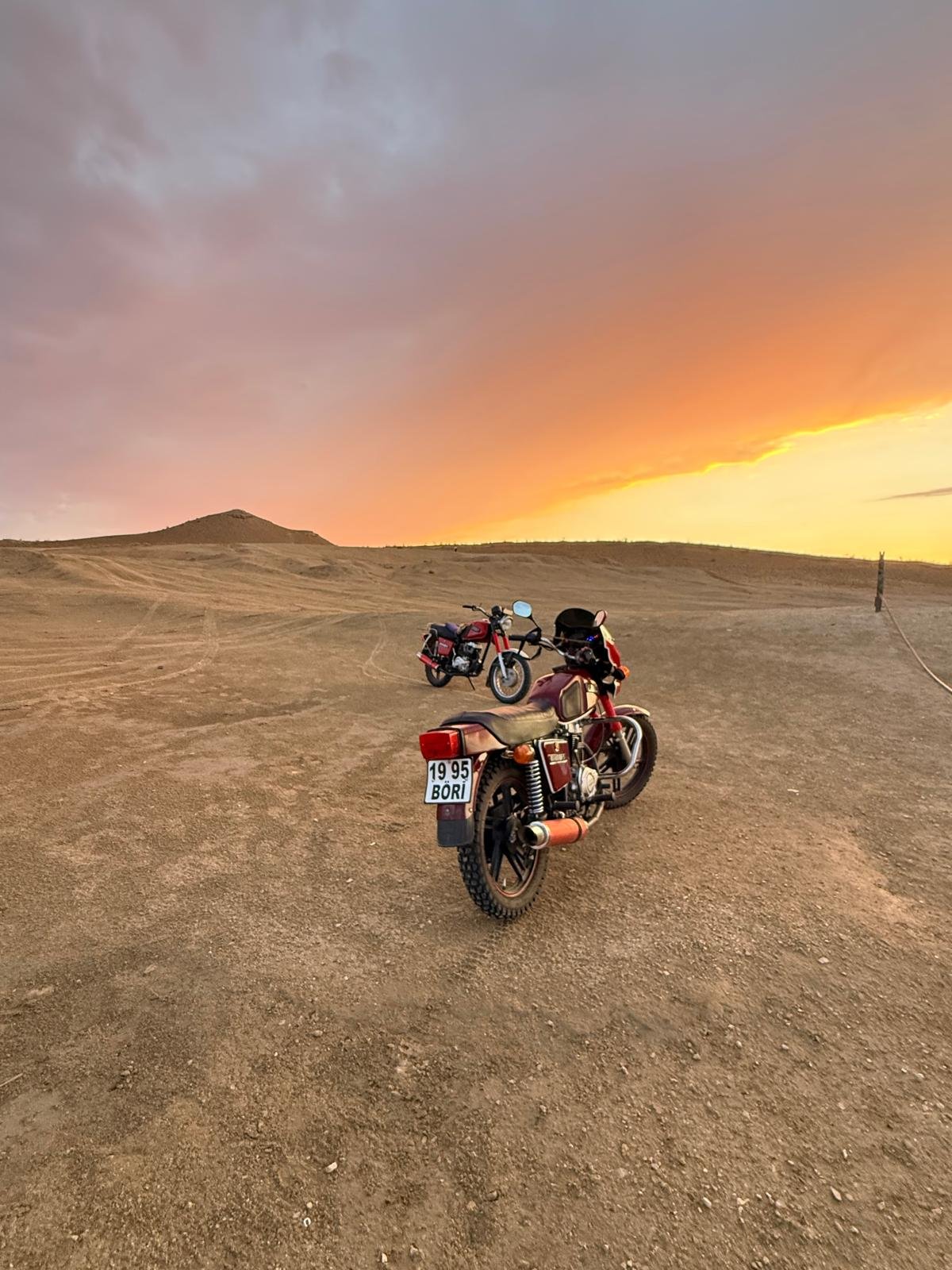
TURKMENISTAN
Turkmenistan. Not quite like anywhere else.
There are few places in Central Asia that prepare you for Turkmenistan.
One day you're among the remains of ancient Silk Road cities. The next you're in Ashgabat, with its vast white-marble buildings, enormous avenues and monuments unlike anything you'll see elsewhere in the region. Beyond the capital lies the Karakum Desert, where the landscape changes again.
But Turkmenistan isn't only about extraordinary buildings and empty landscapes.
I also met people who were curious about where I'd come from, keen to talk and generous with their time. Those encounters were some of the things I enjoyed most.
Visiting takes more organisation than in neighbouring countries. Tourist visas, local guiding and approved travel arrangements need to be worked out in advance.
That's where having experienced people on the ground makes a difference.
I can help you include Turkmenistan as part of a wider Central Asian journey, and work with my local partners to put together a longer visit if the country particularly interests you.
TRAVELLING IN TURKMENISTAN
This is one place where local knowledge matters.
For Turkmenistan, I work with local partners I've travelled with myself.
They provide the local guides and transport, and handle the visa-support process. I work with you first on the journey itself: how long you have, what interests you and how Turkmenistan fits with the countries either side.
Then we build the route with the local partners.
That means you don't have to take a standard itinerary simply because the country requires more organisation.
About the visa
For most tourist journeys, the visa process requires a letter of invitation arranged through an authorised Turkmen tourism company. My local partners handle that process as part of the trip.
Final approval remains with the Turkmen authorities, so we'll allow time for the paperwork and confirm the practical arrangements before you commit to flights or other non-refundable bookings.
THE ROUTE
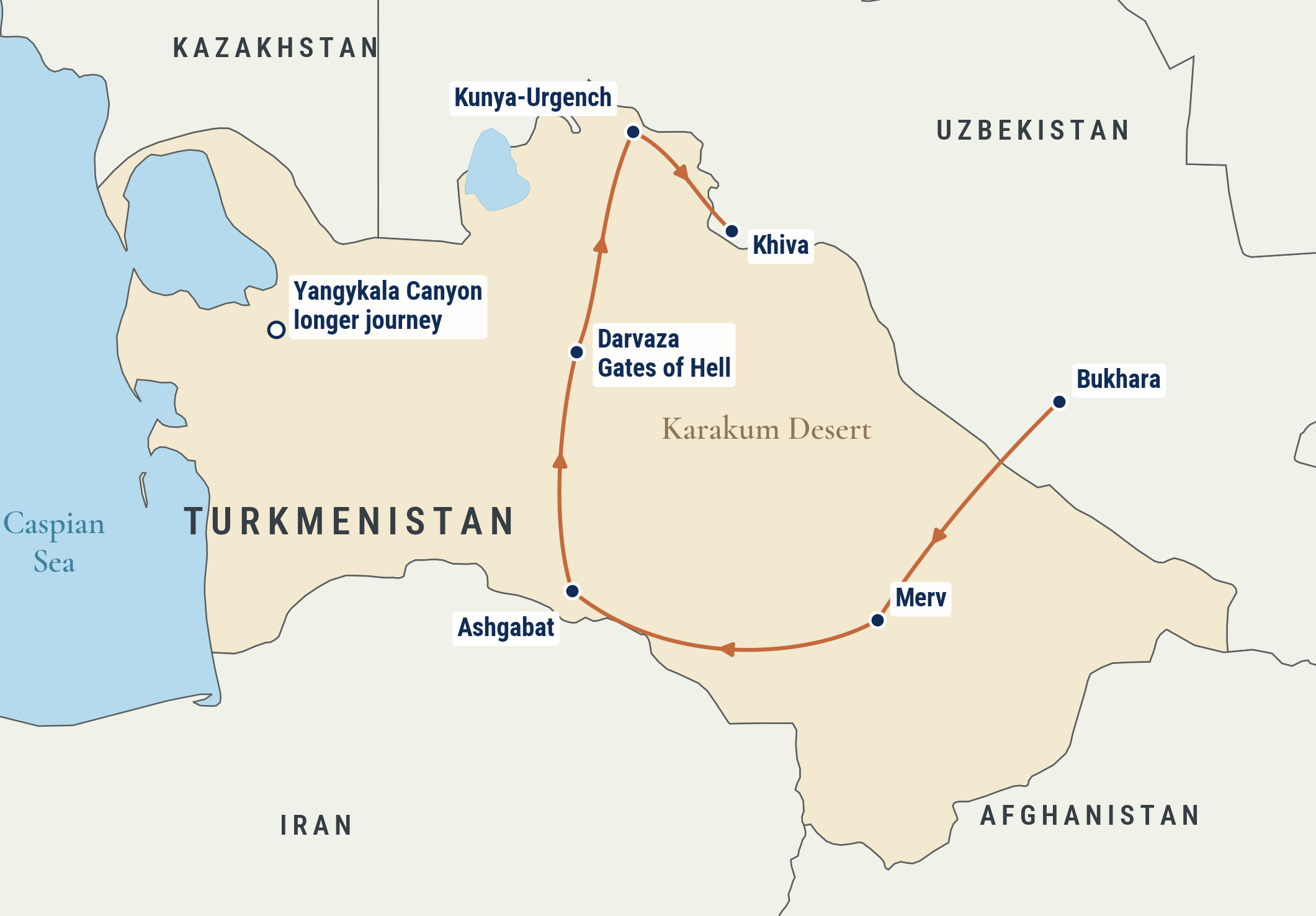
Bukhara → Merv → Ashgabat → Darvaza → Kunya-Urgench → Khiva
One of the most interesting ways to include Turkmenistan is between two parts of an Uzbekistan journey.
You can leave Uzbekistan after Bukhara, cross into Turkmenistan and travel through ancient Merv, Ashgabat and the Karakum Desert before returning to Uzbekistan towards Khiva.
It gives you several days somewhere completely different without having to build an entirely separate journey around it.
You'll see the remains of an ancient Silk Road city, an extraordinary modern capital, desert landscapes and the monuments of Kunya-Urgench.
The route works particularly well for people who want to experience more of Central Asia than the usual Uzbekistan circuit.
Typically 4–6 days | Locally guided | Border routing confirmed for each journey
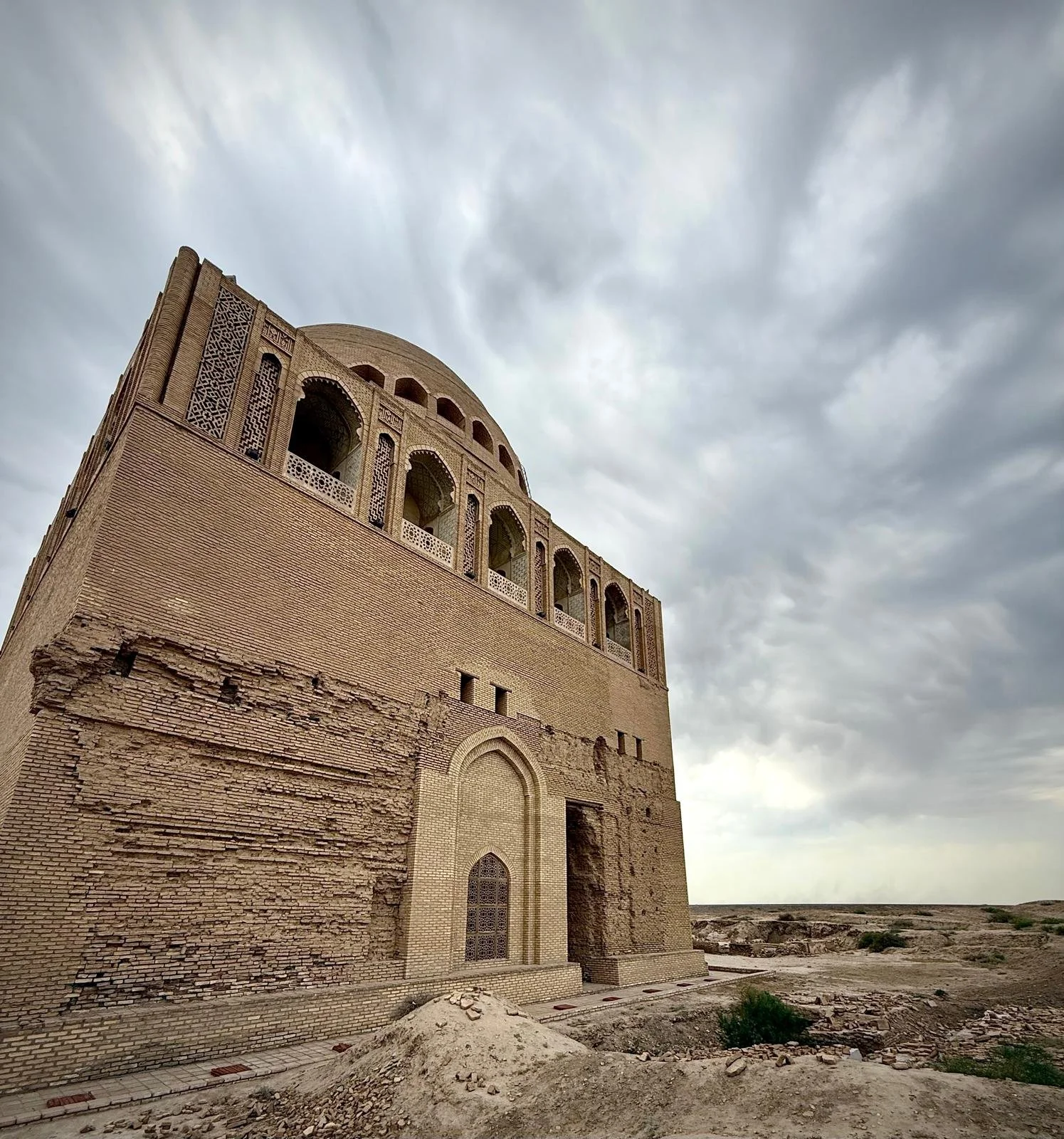
MERV
An ancient city on an enormous scale.
Merv is somewhere I'd make time for.
It's not a beautifully restored old city where you wander from monument to monument. It's a huge archaeological landscape, with the remains of different cities and periods sitting alongside one another.
The Mausoleum of Sultan Sanjar is one of the most impressive surviving buildings, but the wider site is what makes Merv so interesting.
It's worth taking time to understand what was here and why it mattered.
A knowledgeable local guide makes an enormous difference. Without some historical context, it can be difficult to appreciate what you're looking at.
If you've already visited Samarkand and Bukhara, Merv adds another dimension to the Silk Road story rather than simply giving you another collection of monuments.
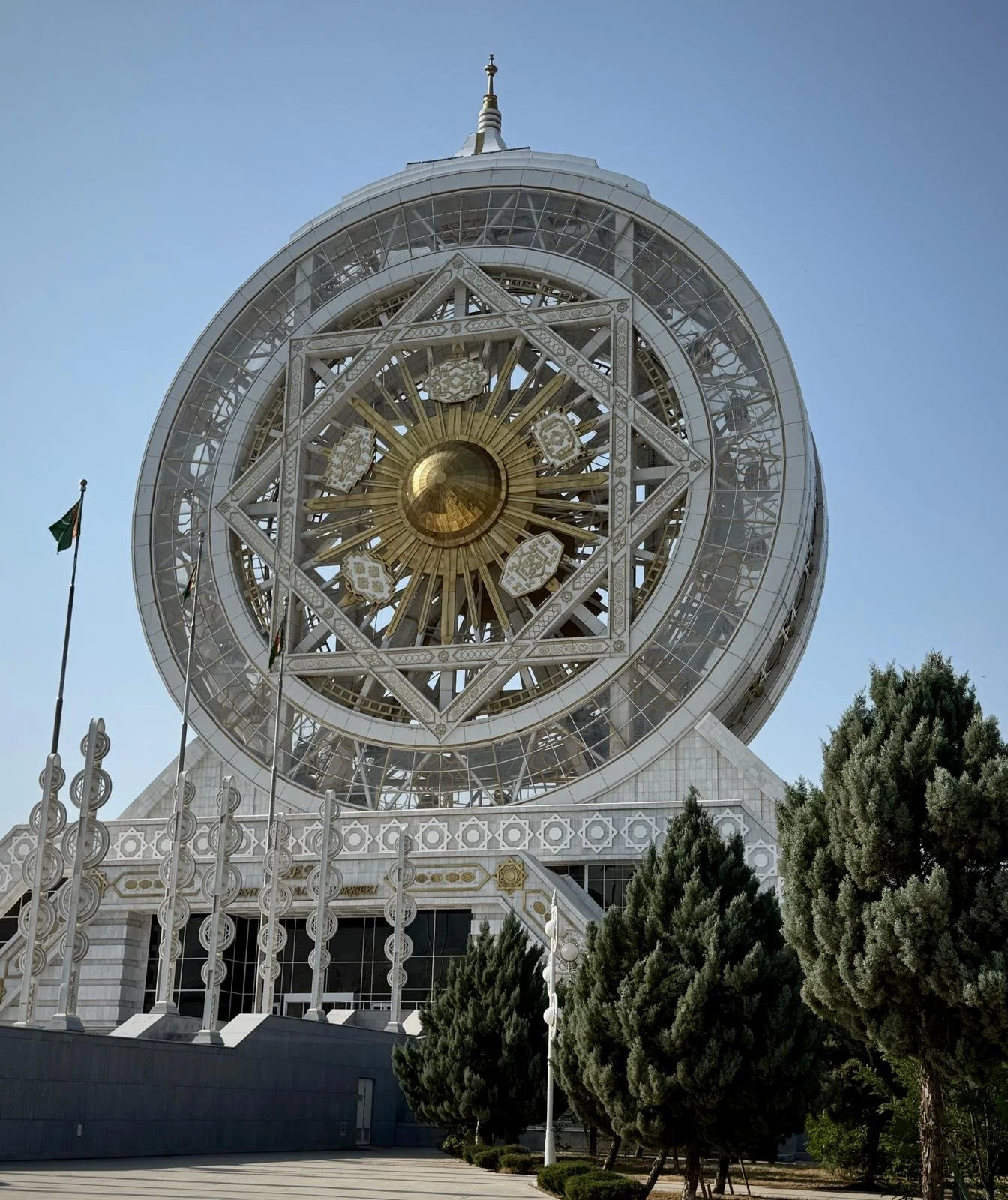
ASHGABAT
A city you have to see to believe.
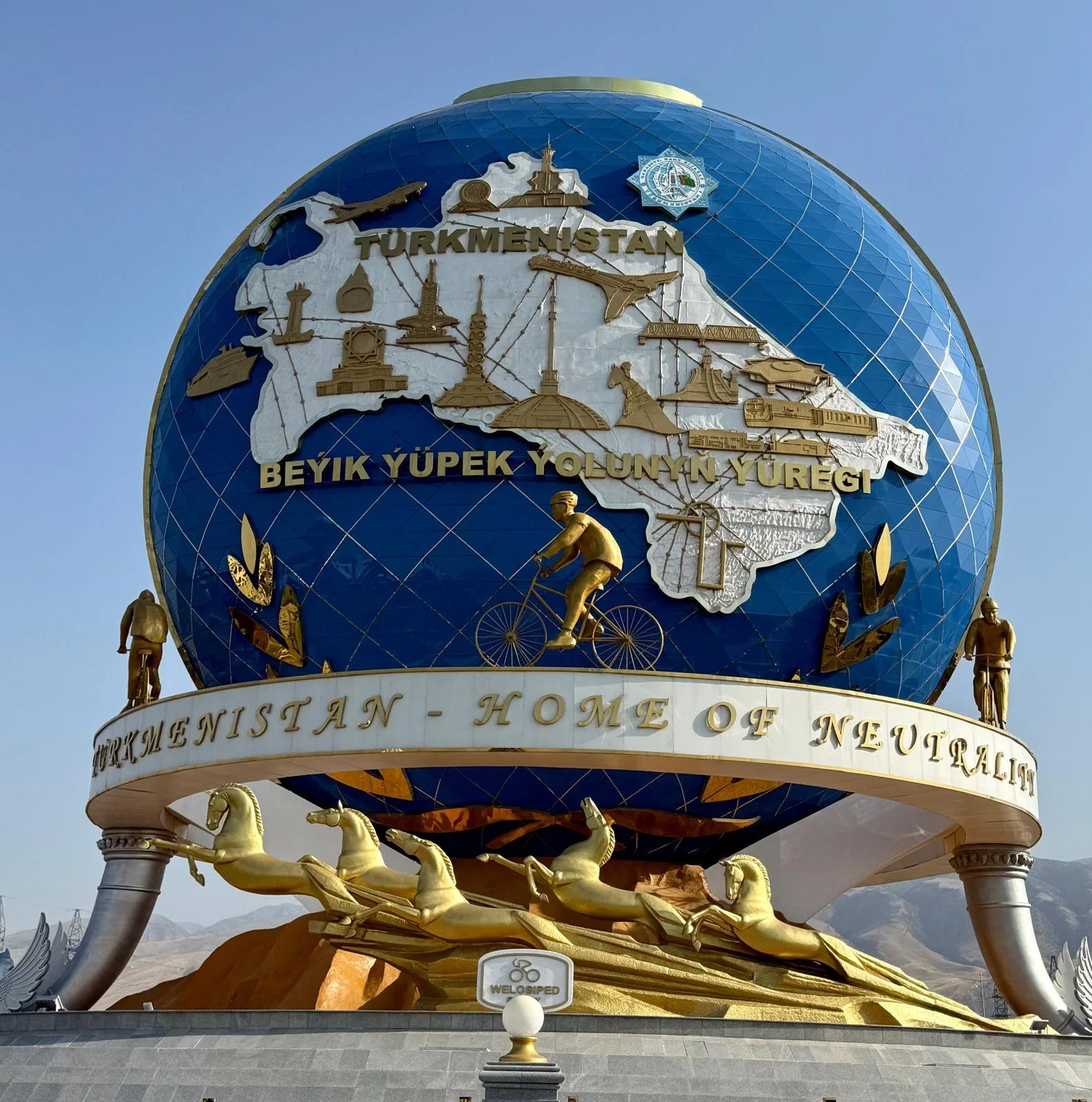
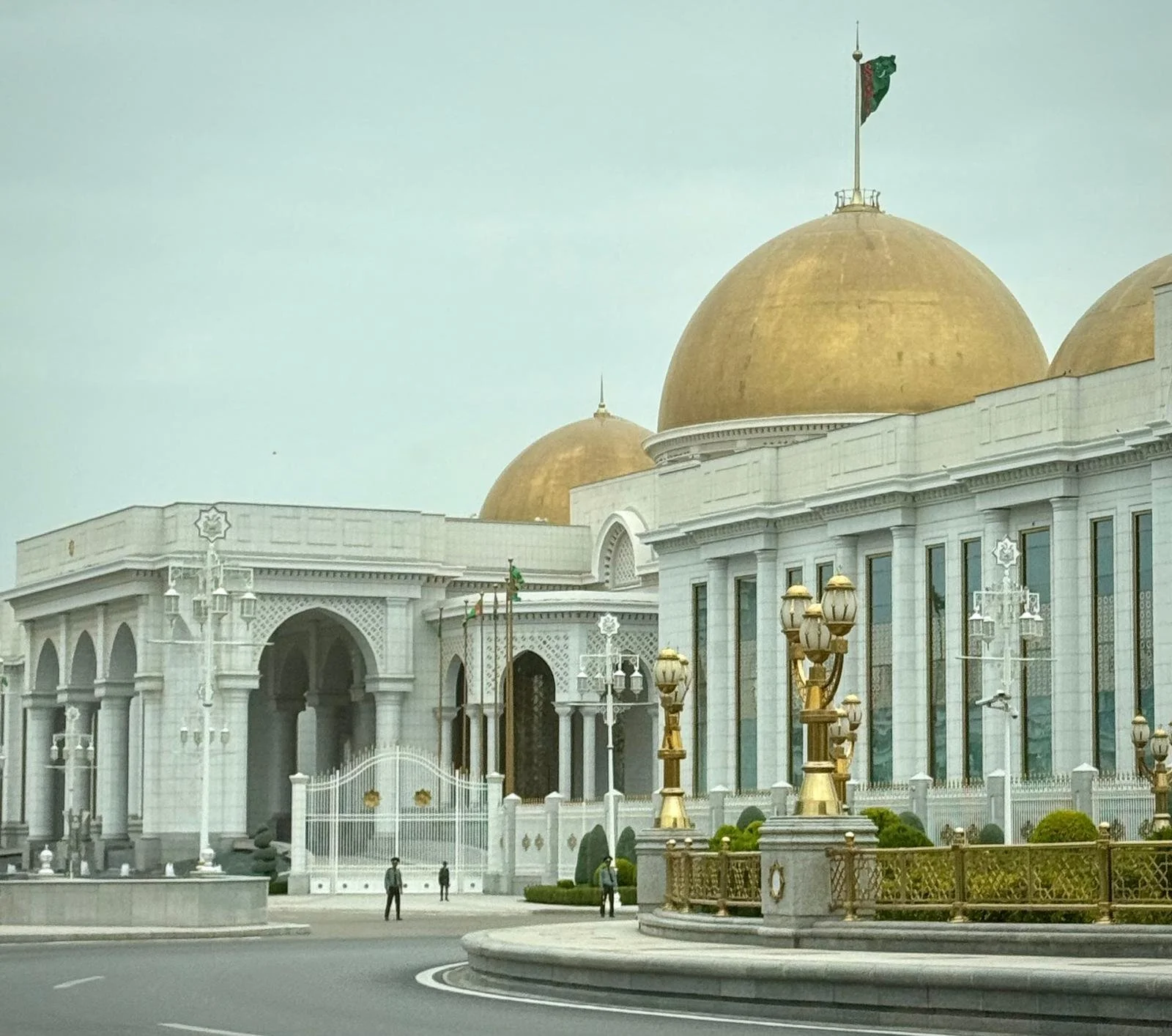
Ashgabat is one of the strangest and most memorable capitals I've visited.
The scale is extraordinary. White-marble buildings, broad avenues, monumental architecture and immaculate public spaces create a city that looks quite unlike its Central Asian neighbours.
Photographs give you an idea, but they don't quite prepare you for being there.
I'd spend time seeing the famous buildings and monuments, but I wouldn't want that to be the whole experience.
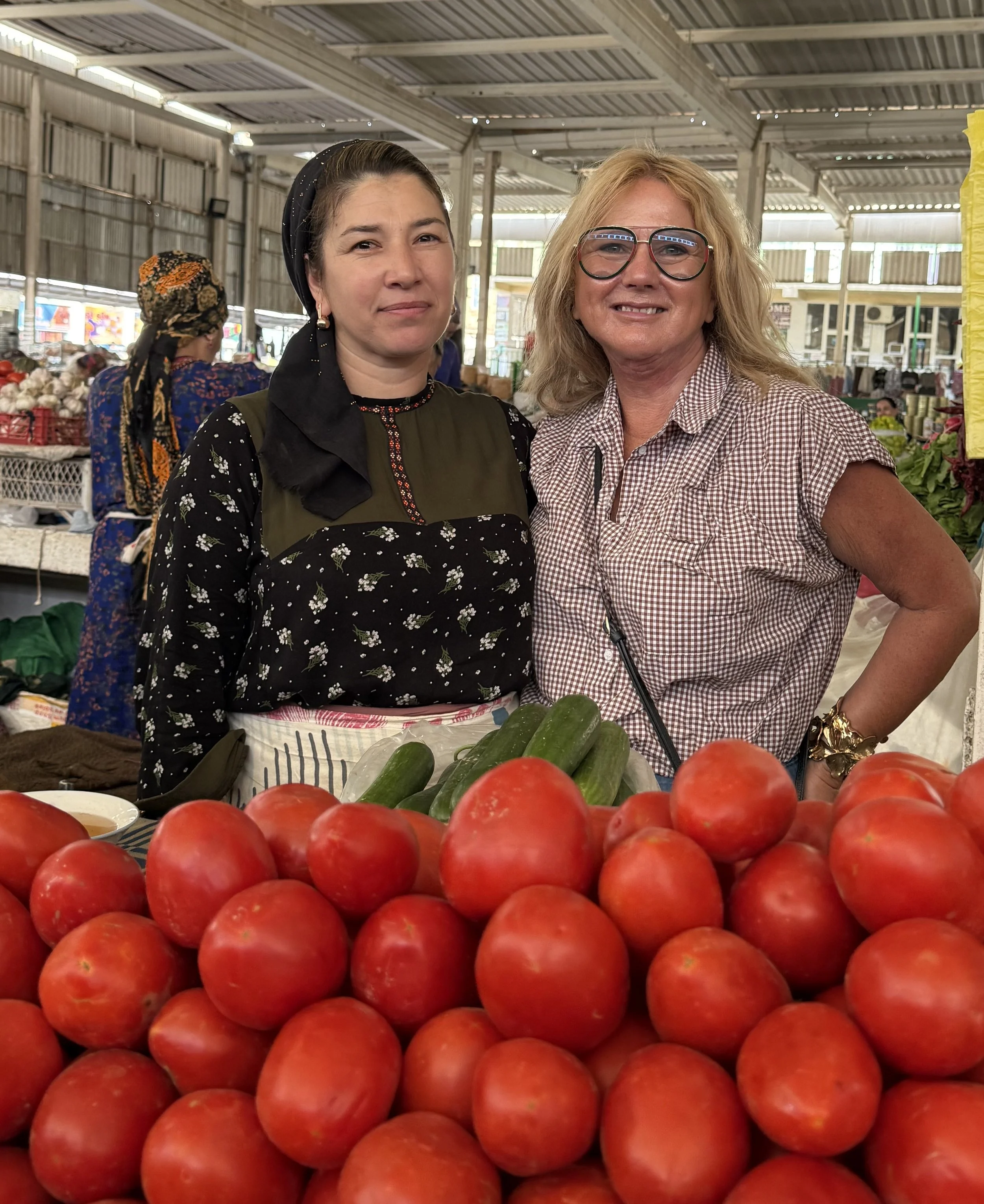
There are markets, neighbourhoods and everyday places that reveal a different side of the city.
The people were one of the surprises.
People were often curious about where I'd come from and why I'd chosen to visit. Conversations could last much longer than expected, and I was even invited into people's homes.
I would have loved to accept those invitations. But the arrangements for my visit didn't allow us to make those unplanned stops, so we had to decline.
It was a reminder that beyond the carefully organised experience of visiting Turkmenistan, there's ordinary life, curiosity and genuine hospitality.
I'd allow at least a full day in Ashgabat. Two days would be worthwhile if the architecture, recent history or contrast between the monumental city and everyday life particularly interests you.
DARVAZA AND THE KARAKUM DESERT
Out into the desert.
Leaving Ashgabat and heading north into the Karakum Desert is another change of scene.
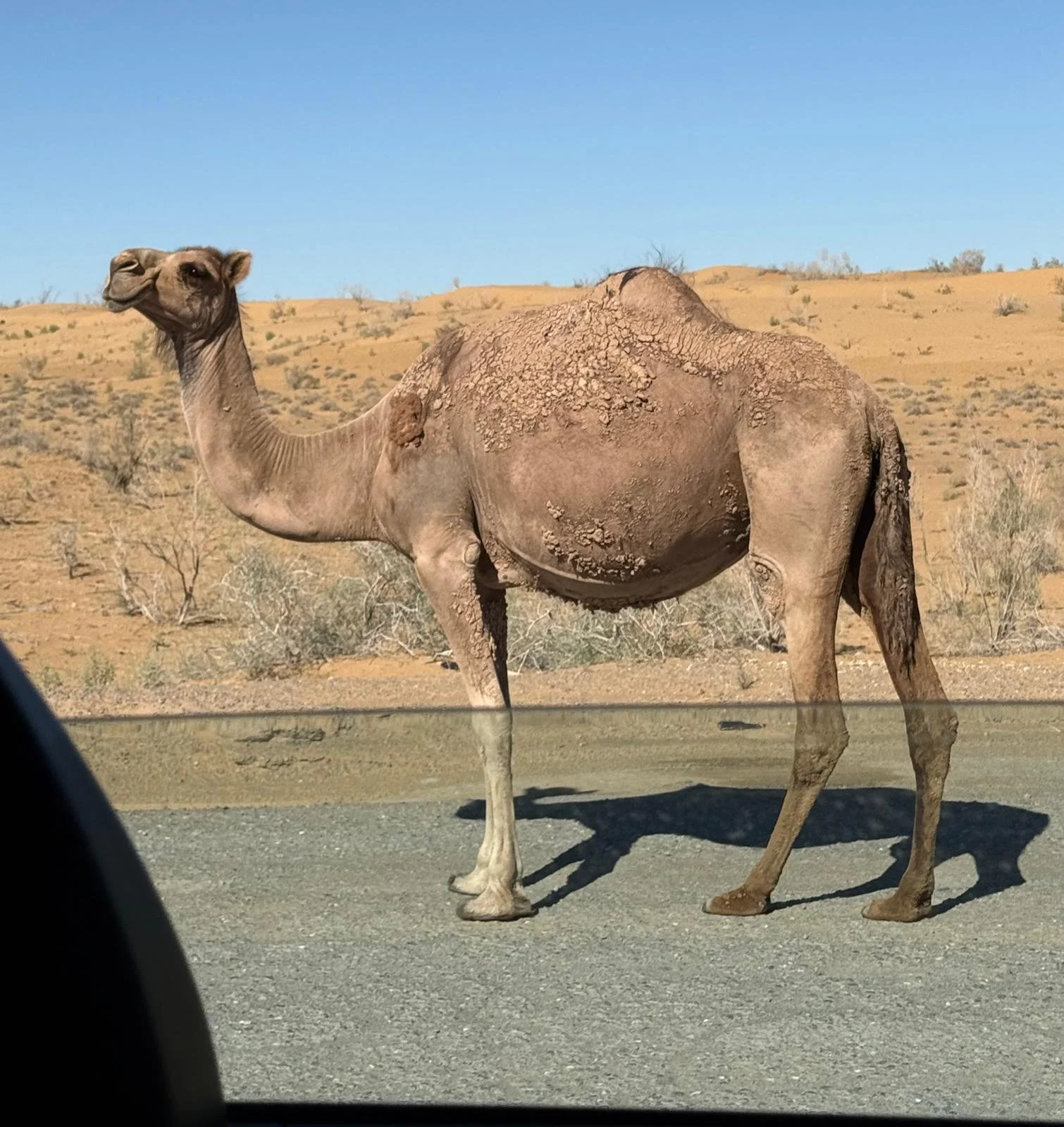
The city gives way to long roads, open landscapes and small settlements.
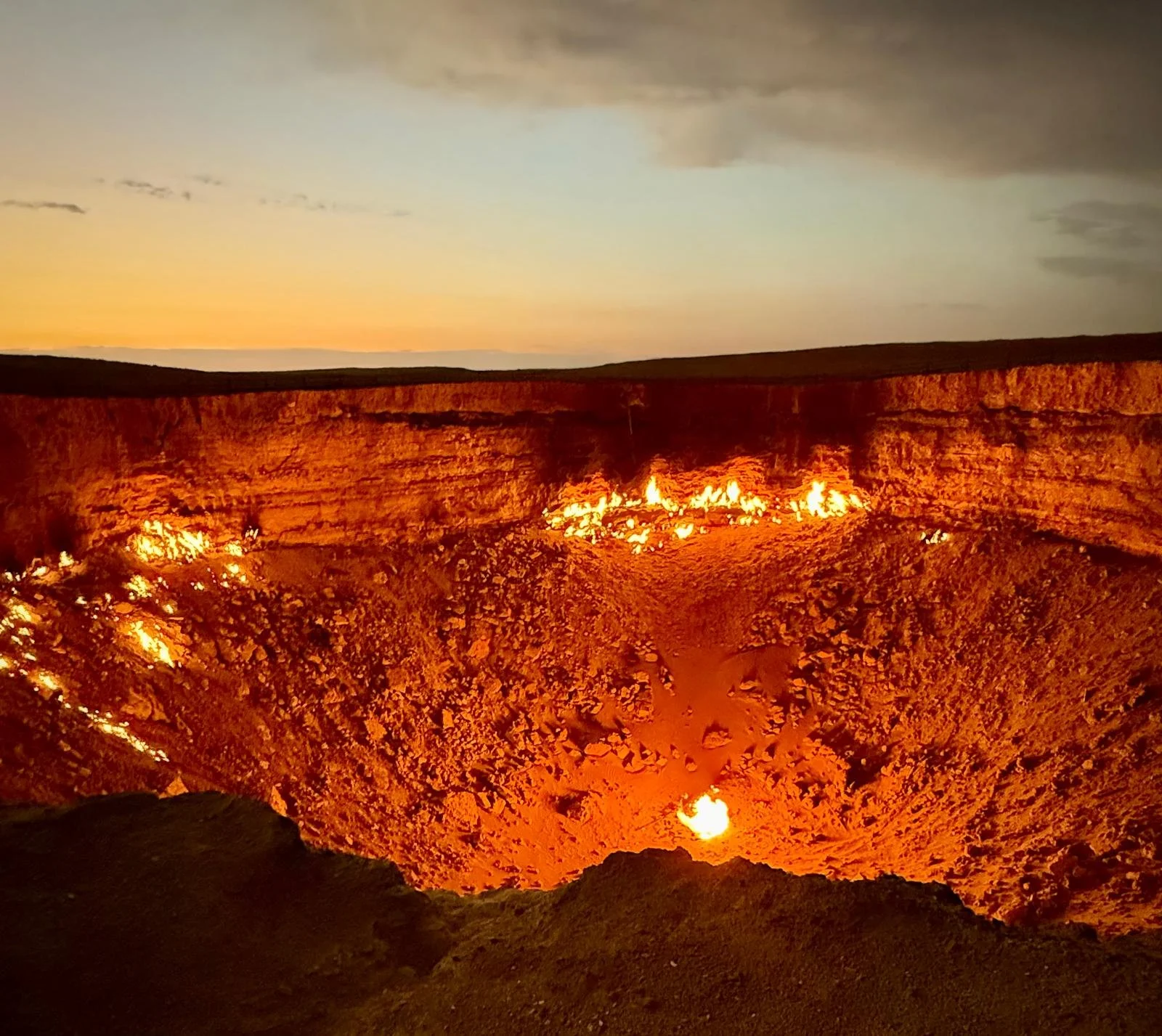
Darvaza is famous for its gas crater, often called the Gates of Hell. For years it has attracted visitors wanting to see the burning crater against the desert night.
The appearance and intensity of the flames have been changing, so I'd check the latest conditions with my local partners rather than promise the dramatic spectacle you may have seen in older photographs.
But the desert is an experience in its own right.
The road is rugged and it’s a long way.
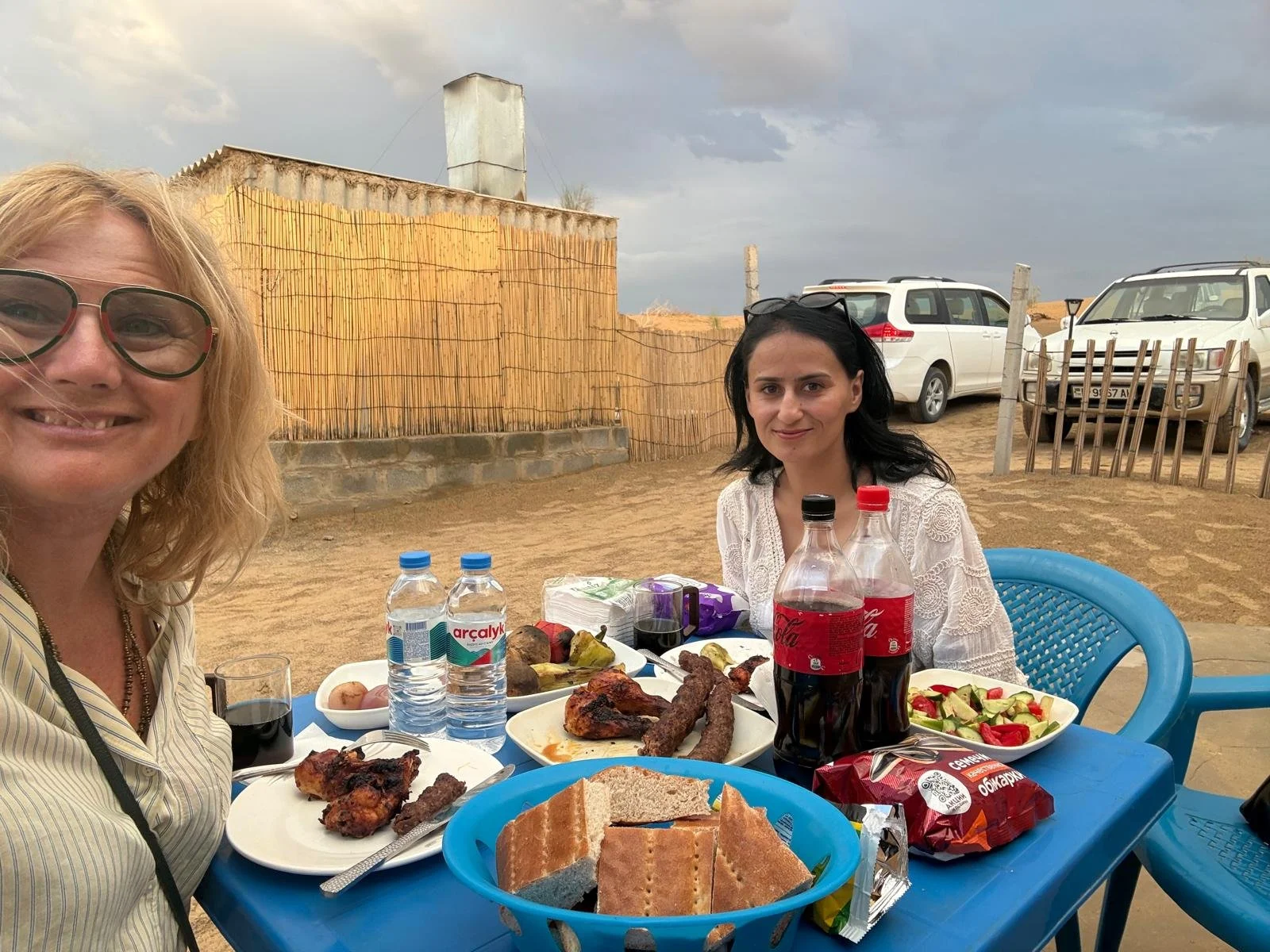
Spending a night away from the city, with very little around you, is quite a contrast to Ashgabat.
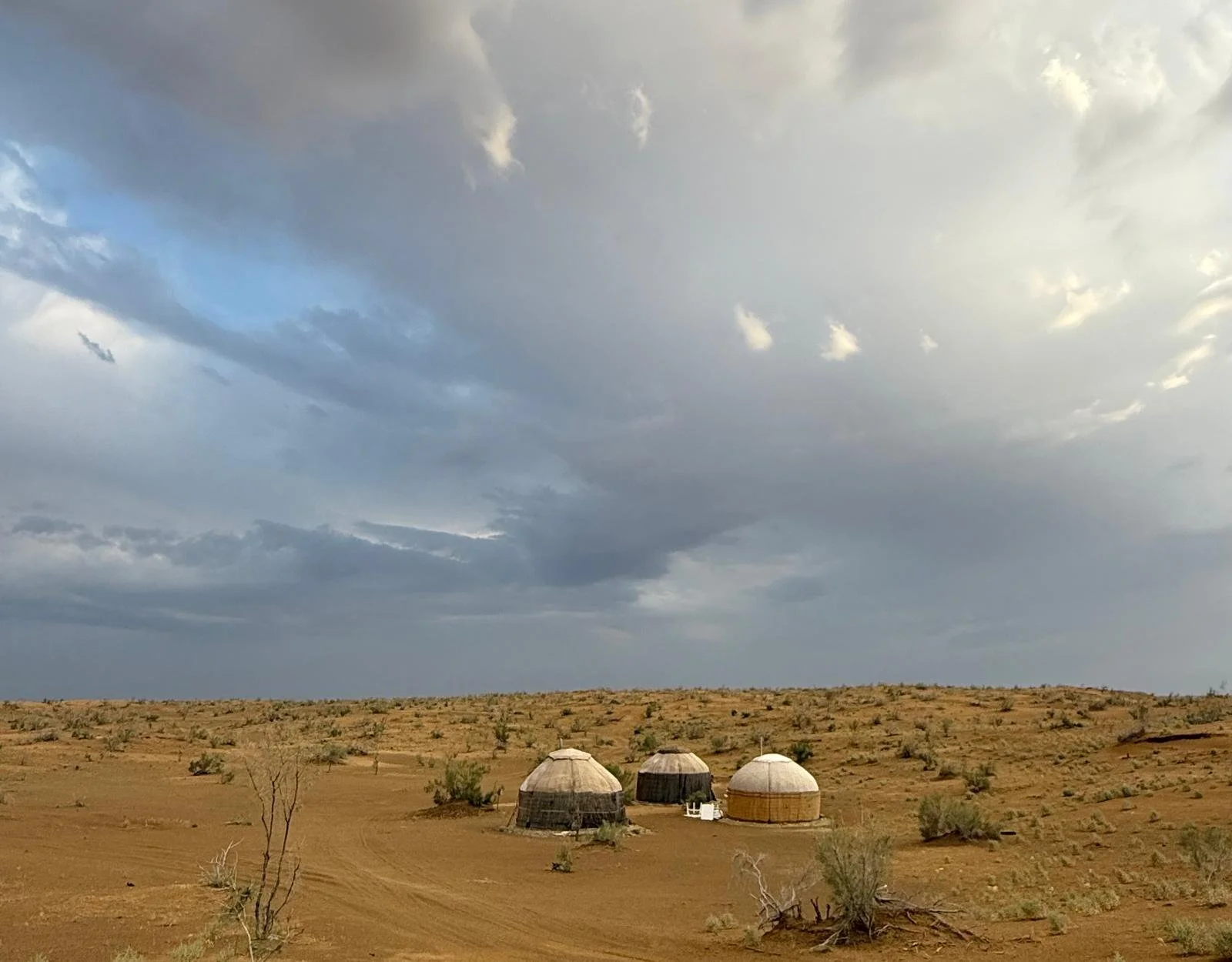
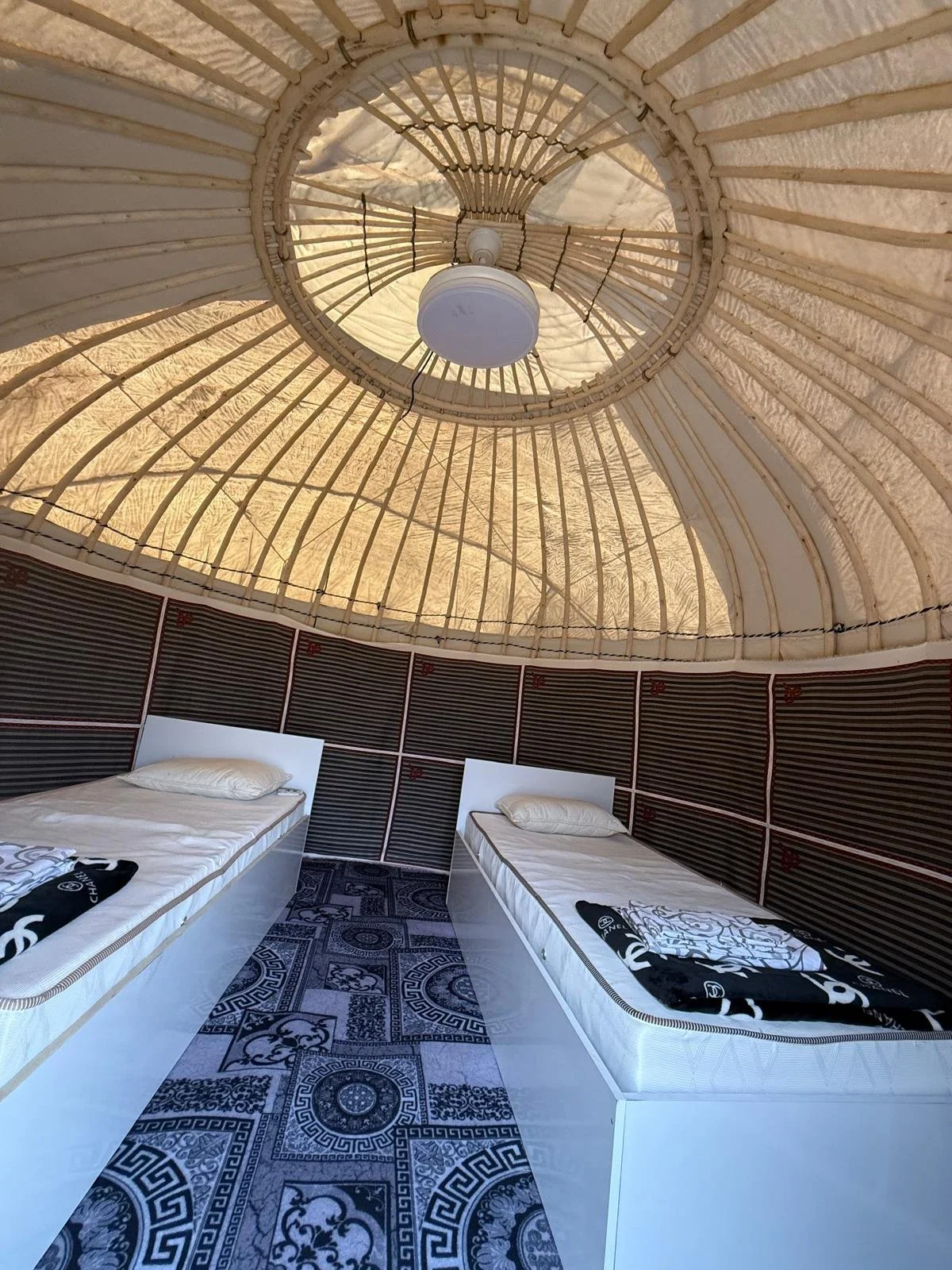
The accommodation here is simple. You stay in a yurt desert camp with basic facilities and shared bathrooms.
The road is rugged and it’s a long way. It's worth knowing that before you go.
KUNYA-URGENCH
A different chapter of the Silk Road.
Kunya-Urgench fits naturally towards the northern end of the journey.
Its monuments are spread across an archaeological landscape rather than contained within a restored old town.
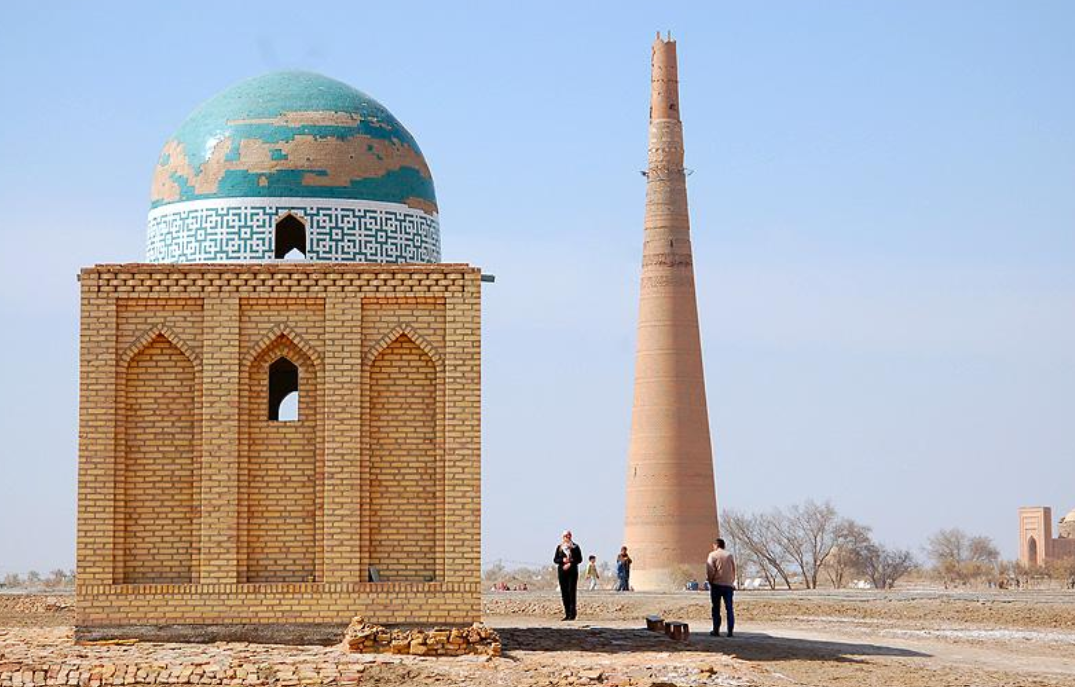
The towering minaret, mausoleums and surviving buildings hint at the importance this city once had as a centre of trade, culture and learning.
It feels very different from Khiva, which makes the two particularly interesting to visit close together.
From here, you can continue towards the border and return to Uzbekistan.
IF YOU HAVE LONGER
A first visit doesn't have to stop with Ashgabat, Merv and the Karakum.
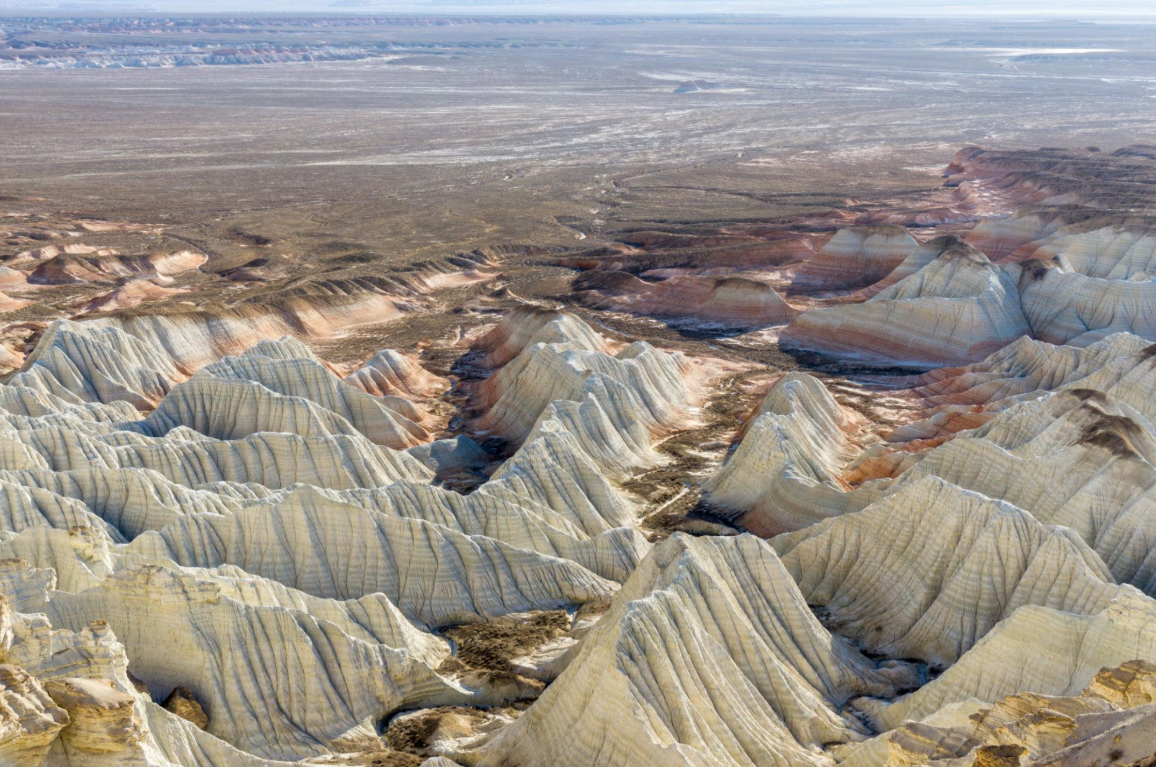
With more time, we can look west towards the Caspian Sea and the landscapes around Yangykala Canyon, spend longer exploring archaeological sites, or build Turkmenistan as a journey in its own right.
Yangykala is particularly interesting for its great bands of coloured rock and dramatic canyon country. It requires additional travelling time, so I wouldn't try to squeeze it into a short crossing between Bukhara and Khiva.
I'd rather design a longer journey that gives you time to enjoy these places than add days simply to cover more ground.
If the Caspian, Yangykala or less-visited parts of the country interest you, we can work with local guides to build them into the itinerary.
There is more to Turkmenistan than this route.
THE JOURNEY BEYOND
Another way into, or out of, Central Asia.
Most people planning a journey through Central Asia start by looking at flights into Tashkent or Almaty.
But Ashgabat is worth considering too.
Turkmenistan Airlines publishes international services to destinations including Istanbul, London, Frankfurt and Milan. Depending on your dates, where you're coming from and where you're heading next, Ashgabat could be a useful place to begin or finish your journey.
For example, you might travel across Kazakhstan, Kyrgyzstan and Uzbekistan, then spend several days in Turkmenistan before flying out of Ashgabat.
Or you could do the journey in reverse, starting in Turkmenistan and continuing overland into Uzbekistan.
The Bukhara-to-Khiva route shown above is another option, keeping Turkmenistan as part of a continuous overland journey.
These are different ways of structuring a trip rather than interchangeable versions of the same itinerary. We would need to check flights, border crossings, visa arrangements and the time available.
I can help compare the options before we decide which direction makes the most sense.
The best route isn't necessarily the most obvious one.
WHERE WE STAY
Comfortable where we can. Simpler when the journey calls for it.
Ashgabat has several good hotels, and I'd choose one that suits the journey and the level of comfort you're after.
Elsewhere, the choice narrows. Some accommodation is perfectly comfortable without being particularly polished.
The night near Darvaza is deliberately different. This is desert accommodation rather than a conventional hotel, and facilities are basic with shared bathrooms.
I'd rather be clear about that than have you arrive expecting something else.
We use accommodation that makes sense for the route, and I'll explain the proposed hotels, sleeping arrangements and bathrooms before you commit.
WHY ADD IT TO UZBEKISTAN?
It changes the rhythm of a Central Asian journey.
The real value isn't simply adding another country to your list.
It's the contrast.
After the great Silk Road cities of Uzbekistan, Turkmenistan introduces you to another part of that history, one of the region's most unusual capitals and several days travelling through landscapes that feel quite different.
It also gives you a new perspective on Central Asia, particularly the differences between neighbouring countries that share so much history.
Four or five days can be enough to get a strong sense of the country. If you have longer, there's much more to explore.
HOW I CAN HELP
Local knowledge, joined-up planning.
I've travelled through Turkmenistan with experienced local operators, and I work with them when designing journeys for Travel Further clients.
I can help decide how much time to give the country, which places are worth including and how it fits with the rest of your travels.
That might mean adding four or five days between Bukhara and Khiva, beginning or ending your Central Asian journey in Ashgabat, or planning a longer trip focused on Turkmenistan itself.
My local partners handle the arrangements inside the country, including guides, transport, visa support and the practical details required for the journey.
I stay involved in shaping the itinerary so that Turkmenistan feels like a worthwhile part of the whole trip, rather than a standard package added on to it.
If you'd prefer me to come along, personal hosting may also be possible depending on my availability. The local guides and operators would still provide the arrangements and specialist support inside Turkmenistan.
BEFORE YOU GO
A few things worth knowing.
-
For the tourist journeys I arrange, the local guide and transport are organised through an approved Turkmen operator.
You can travel privately rather than join a group, but the itinerary and arrangements need to be agreed in advance.
-
For most tourist visits, a letter of invitation is required. My local partners organise the visa-support process and advise what documents are needed.
Approval is made by the Turkmen authorities, so I recommend allowing plenty of time and keeping travel arrangements flexible until the documentation is confirmed.
-
Potentially, yes.
We can investigate an overland entry and an international departure from Ashgabat, or the reverse journey.
The final route depends on the approved visa arrangements, available border crossings, flights and local operating requirements.
-
We can design the journey around your interests and preferred travel period, subject to local availability, visa approval and other travel requirements.
A private journey can be arranged without requiring you to join a scheduled group departure.
-
Ashgabat has comfortable hotel options. Elsewhere, accommodation may be simpler, particularly at desert camps.
I'll explain the specific accommodation, bathrooms and facilities proposed for your journey before you commit.
START PLANNING
Curious about Turkmenistan?
Perhaps it's Ashgabat's remarkable architecture, the ancient cities or the thought of spending a night in the Karakum Desert.
Or perhaps you're planning a longer journey across Central Asia and wondering whether Turkmenistan would be a worthwhile addition.
Tell me where you're hoping to travel, how much time you have and what interests you.
I'll help work out whether Turkmenistan fits, which route makes sense and how my local partners can make it happen.